The Earth Skills Correspondence Course is a ten block course that leads students through the skills of wilderness survival, in your own bioregion. It emphasizes the mastery of shelter, water, fire, camp skills, plants and trees, cooking, safety & hazards, attitude & philosophy and instructor training. Ricardo Sierra mentors the course through e-mail, this blog and phone consultations, and students are self-guided. The course provides a wealth of skills and a powerful foundation from which to build and grow in any personal or wilderness study direction.

Sunday, April 5, 2009

The Earth Skills Correspondence Course Skills Weekends!

Hey everyone! Just wanted to send you a quick note to let you know the dates of the 2009 Earth Skills Correspondence Course weekends. They are as follows:

May 30th July 18th October 10th

These weekends/dates are for any student of the Earth Skills Correspondence Course who wants to learn or practice skills in person here at Hawk Circle, in Cherry Valley, with Ricardo (me!) and any of my staff or semester students, as a benefit to being in the program. We want to support you in your pursuit of learning and give you a chance to learn first hand, rather than through distance learning, so here is your chance! (If you are not a current student of the Earth Skills Correspondence Course, just apply and sign up and you can join us for a great time!)

You can come on Friday evening, if you wish, to camp out, or stay in one of our cabins or the Adirondack lean-to or just sleep on the couch in the barn workshop room. We will start our group gathering on Saturday morning, finding out what everyone wants to work on, and then do some hands on crafts or skills while we get to know each other, connect and network....

It should be a lot of fun. Feel free to bring family members if they want to wander the camp on their own, or hang out by the campfire, or explore the woods around Hawk Circle. They can even head in to Cooperstown for a walk around the village, if they want to.

Food is on your own, so bring easy to prepare meals, or something you can cook over the campfire, or we can all just go in on getting pizza in Cherry Valley or Cooperstown, after a good day of working on skills. So it is pretty easy and laid back.

Housing has already been covered, and you can bring any of your course material with you for review, too, if you want. We will wrap up Saturday evening, and you are welcome to stay over on Sunday, practice on your own, go off for a hike or gathering walk, etc. If I am free, I will try to connect with you again on Sunday, but my schedule may or may not be free so I can't promise anything! Things are never dull around Hawk Circle, that's for sure.

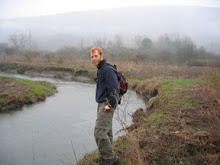
And, just to let you know, I was successful in fishing on the second day of the season, as my pic can attest! Great day on the water, and we did get in some tracking, too. Otter tracks? Fisher tracks? What is your guess?!!!

Please RSVP about the upcoming weekends so I can plan how many will be coming out. Let me know what you want to work on while you are here, as well as how many are coming with you, and when you think you will be arriving. That will help me plan for a great weekend!

Wednesday, April 1, 2009

Opening Day: Trout Season, 2009


Opening Day. Have you ever been? Okay, for the first day of trout season, it is the opposite of deer season. Cold. Usually damp, with high, fast moving water that make it challenging and tough to catch fish.

We headed out today to try our hands, the Earth Skills Spring Semester students and I, to wet our lines and see if we could beat the odds! The end result: Nothing, although we did donate some hooks and worms to the great fish gods in the waters....

But it was nice to be out. Slowly growing skunk cabbage. Cautious ruffed grouse walking around. Muskrat tracks, raccoon tracks, mink tracks, etc. Beaver chewed twigs and sticks. The smell of rain on dead grass and river silt.

We started at the headwaters of the Susquehanna River, and moved around, to green swirling pools and rushing fast water over gravel. It was really fun and we had a great time....

Can't wait to head down to the East Branch of the Delaware River soon, when we can go all day.

Hope you enjoy the pics of some of our past fish catches here at Hawk Circle over the past few years. Ice fishing, and fish from creeks and rivers from around here too. Good times, and amazing fish. Beautiful fish. Sweet water. Bright red oosier dogwood. Good people and even an eagle or two.

Awesome!

We didn't get any bites even, but that's why they call it fishing, not catching, right?

Anyway, it's interesting to think of how frustrated I would be if I lost any of my hand made bone hooks instead of the modern ones. I can imagine how native peoples would feel getting their hard made tackle lost in the branches, roots, grass and weeds in the rivers!

This last pic is one of me, about fifteen or sixteen, after going out on a boat in the Pacific, fishing for silver salmon or coho salmon.... It was a great day, spent with my dad, and I didn't even get seasick!

Enjoy!

If you can get outside to go fishing, wander along a green water river, or track in fresh sandy silt, by all means, go! It will do wonders for your soul, and you will wonder why you even bother going in to work day after day.... Okay, I am just kidding about the last part, but isn't it fun to imagine hunting or fishing as your only job? Making your weapons, tackle, string, weights, arrows, etc?

Now that's what I'm talkin' about!

Sorry, I won't do that again!

Tuesday, January 6, 2009

Starting your Own Wilderness Program-An Article Reprint from 2002

This is a reprint of an article that I wrote which was published by the Bulletin of Primitive Technology in 2002. Our school is celebrating our 20th year this year, (our first camp was in the summer of 1989) so the years are a bit off, but overall, the rest is pretty good in terms of content, and seemed timely way back then! Enjoy and I hope to post more of my archived articles on my website's media page later this winter.....


Starting Your Own Wilderness Program Words of Advice and Warnings!

So, you've run a few workshops and day programs in primitive living skills for a few years, but you're still working at that pesky full-time carpentry job (or whatever). You'd love to just make the switch from work to teaching skills full time. Hey, then you could spend all your time in the woods and teaching, doing what you love to do! Right? Not so fast, Buckskin Boy (or Girl)! Slow down! Take a deep breath and think this through...

I was once in your position, learning, teaching and working. I couldn't wait to make it to the big time, with my own school, camp or program. I was most familiar with summer camps and at the time there were virtually no “kid” programs around, so I thought it was the perfect way to teach and be in nature all summer long. Besides, I might make some good money too! It was a nice theory, but reality was a bit different. I found there was a price I paid for starting a full time program. I just spent the last three weeks chained to a computer working on a 50-page health & safety manual as required by the New York State Department of Health. I pretty much know the Sanitation Code for children's camps and food service by heart! Been in the woods lately? Man, from my window, it sure looks great...

Let's talk about the things you'll need to run a successful wilderness school, camp or program:
#1. First, you'll need to determine if your local area has enough of a population that is interested in what you're teaching. Is there a large urban or suburban area nearby? What is your plan for getting the word out that you exist to your target audience? How much money do you have for marketing and advertising? What kind of a brochure or flyer are you planning on creating? How much do you estimate this will cost? All of these things will require a plan and lots of time to organize. It will involve weighing pros and cons and possibly taking some risks. (Not to mention start-up money.)

#2. Now, you'll need a location. Where are you going to run your programs? If it is public land, have you checked into what you'll need to know/do in order to run your program there? Have you reviewed the requirements or restrictions on that land? (i.e., can you legally harvest plants, make shelters, etc.?) If you're planning to use private land, have you checked with your local zoning ordinances? Called your neighbors to find out if they'll mind 25 dread locked, loin cloth-wearing, yucca beatin', grasshopper eatin' savages wandering around on your place in full view of their family reunion? It is always better to take a good look at this issue before moving on to the next one.

#3 is...Insurance! Do you have any liability insurance to protect you in the event someone sues you because you didn't give them all the names of the edible plants in the bio-region or because they got too many black fly bites? Do you have medical/accident insurance in case a student needs to go to the Emergency Room to get 12 stitches for a cut made while carving? (Don't laugh, it will happen!) Do you have any first aid or medical training to handle emergencies in the field? These are very important questions too.

#4. We also have the issue of safety. Have you made a plan to deal with any and all possible hazards or situations that may arise? How well trained are all of your instructors and staff, (even if it's just you and your best friend)? Have you contacted your local permit-issuing official before going ahead with plans? (You don't want to have them show up in the middle of your program to close your doors for failure to comply with state/local ordinances!) What governmental agencies handle your type of program and set forth guidelines for safety? Is your building/facility up to "code" in your state? Do you have enough water/septic capacity to handle the number of students you are planning to have attend? Does your cook have the appropriate food service training if you plan to serve food? Who will buy or prepare your supplies? Who will clean and cook during your program? Who handles your phone, mail and basic administration? Who will make sure the van is full of gas, oil checked and all gear safely stowed (including food!)? If your answer to all of the above is "I'll do it!", then you probably should think long and hard before making the jump to the next level. I know from personal experience that you can do it all for a few years, but your program and personal life may suffer if you insist on doing it that way. In the end, you may find that you can't do it all, as each area of responsibility gets increasingly complex and involved. Personal woods time really takes a nose-dive and you may find you're pressured all the time without getting anywhere! It is also helpful to find out if your spouse or partner shares in your desire to put in long hours for free and also to lose family and relationship time to your personal dream and vision. (Better to know now and deal with it than to wait until he/she has the bags packed to go live with the parents!) All of these things are vitally important to the long term success of your school or program

OK, so have I scared you a bit? Good! It is better to enjoy a cold splash of spring water in the face now than to invest time and money into something that you'll abandon three years later from exhaustion and stress! My hope is that what you start as a program will be a success, and that you will know what you are getting into and be able to prepare properly for the challenges that lie ahead.

I have run my camp for eight years now, and taught skills and workshops for over 15 years. I have learned a lot the hard way. I know joys and sorrows from my blood, sweat and tears visionary project. Some days I wouldn’t trade it for anything, (other days, well....make me an offer!) I don't want those of you out there to be discouraged. I am more concerned that you are realistic about what you might be undertaking. There are a lot of opportunities and great projects out there waiting for someone to do. If you are inspired to teach wilderness skills don't let me stop you! Go for it! My main point is to get you to stop and think for a while to consider if you're truly ready to commit to the whole vision and reality, not just the fun stuff like campfires and mud camouflaging. (Chances are, you won't be leading that every night -- you'll be on the phone)!

Here is some personal advice: Take your time. Get some good research and training in every area outlined above. Enjoy being small time and having less administration details to deal with. You might try working in various programs for a while where you won't make as much money but you'll have more fun and “woods” time. It might even be better to just stay small and privately mentor local kids where you are, in your free time. Think of everything, and if you are still passionate and ready to commit, then begin the process. If you can, assemble a team/tribe and work together to make it happen. (That is an educational experience too!) And if all else fails, go into the wilderness, practice one skill for ten years and then come out and write a book. Then start your school. Your chances of being a success will be much higher! In many ways that might be the best advice of all!

Sunday, December 14, 2008

Correspondence Course Weekend Retreats 2009

It's almost 2009, and as the year winds down, I am already planning the coming year and beyond. I got the deer processed and hide fleshed and salted, and the skull and horns are being cleaned to be used in councils for Red Deer Camp or men's lodges here at Hawk Circle in the Earth Skills Trainings. It feels good to have meat to offer to my students to share by the fire, or have Trista make an awesome stew or chili. Thank you, deer.

Which brings me to this post. I am thinking of planning three Earth Skills Correspondence Course Weekend Retreats, where students of the course can come here for a weekend, bring their own food, set up a tent or stay in a cabin, and study the skills, have me look over their coursework and give hands-on instruction during the weekend for a few hours on Saturday and a few hours on Sunday. No charge. What do you all think of that?

We get really busy in the spring, because of the Tracking Expedition, the Advanced Bird Language Intensive, the Spring Survival Trek, all kinds of school groups and then camp preparation, staff training and the camps themselves start rolling in June-August. However, I would love to find a way to schedule something in for you all to attend and get some attention and move further in your course. Would something in July work for any of you? How about October or September? I don't like to get too into the late fall because of deer season (archery) but we could also plan something for the last week of November or something too. April might work, if you can make it.

What works for you, people? I can throw out some dates, and see what sticks, but I really don't want to tie up my weekends if no one is actually going to show up. So I need to hear from you! Otherwise, I will work on my timberframing, or cutting firewood, or helping gather wild foods, or plant the garden or any number of gathering, teaching, or building chores that need to get done around here.

The weekends are pretty laid back, with use of our barn room, heated with a wood stove, as well as the tipi, for teaching and practicing skills, and the whole property for gathering and making grass mats, or making stone tools, or gathering wood and making fire from scratch, to cooking, or building a shelter or rock boiling or any number of other cool things that we can work on. And we can hang out, carve by the fire, tell stories and I can share whatever it is you need help with, from mentoring to professional marketing to earth philosophy and more. Basically, it is up to you, in a lot of ways. If there is a way for me to do it, I will teach and share what I can to help you get better.

If you haven't gotten the course yet, this might be a good time, too. It's $450 if you pay in full, until January 15th, and you get the full course, open ended, with no time limit to finish, plus mentoring support, as well as access to me for questions and troubleshooting, and you even get three weekend retreats here at Hawk Circle, to pick my brain and get hands-on skills teaching and advice. How can you go wrong?

Anyway, make a comment on this blog and let me know if you have a preference for a weekend or time of year, and we will move forward on getting the dates rolling!

Sunday, December 7, 2008

My First Buck

I got my first large buck yesterday evening. It was something really significant for me, not because it was about killing anything, but it was about taking a large step closer towards mastery in hunting that has been a long journey in the last six years. It started with Frank Sherwood's Red Deer Hunting Camp class that we offered for two years, and then continued on my own learning....

I've been away for a while, mostly dealing with some health issues with my son, Javier, which you can read about in my Journal, so please excuse the long absence from the Trailhead. But I will post more as soon as I can. I am off to do a sweatlodge of thanksgiving, and will write more as soon as I can.

Okay, I am back. That was a good lodge, very hot, and it is freezing here, about 12 degrees F with 25-40 mile an hour winds blasting across the hills, with light blowing powder snow.... Winter is here! Our hair froze as we left the lodge, and it was refreshing...

So, about the hunt. The first thing I can say is that Hawk Circle is an old farm, where most of the old orchards and fields are overgrown, with all kinds of brush, hawthorne, alders, honeysuckle bushes and dead and dying pines, elms, aspens and poplars. There aren't a lot of clear, open areas that deer avoid, with easy to find transition trails in the brush, that the deer love, (lots of cover). So it is actually hard to know where they are moving through, and where they aren't, and when, too. It is part guesswork, part luck and part detailed observation and tracking.....

I had to wait until I knew the wind was coming from a clear south direction. It had to be a real wind, not just a breezy, shifting wind that changed direction every chance it gets... I found a thicket of tall pines, and lots of brush, and crept up through the crusty snow, step after step, waiting for the wind to pick up, and pausing between each for a few minutes, then moving quickly for ten steps, and waiting longer.

I stalked up the hill, and pulled my collar up, to ward off the wind. It was strong and cold. It was about 3:30 pm and I figured I had about an hour to wait before the deer came down the hill, through the brush, to nibble on fallen apples, small browse and head towards the alfalfa fields a half mile away. The deer on our hill love to spend their days on the ledges above our old orchards, in thick brush where they can see someone coming for a long distance. I leaned back against a young white pine and scanned the woods.

I checked below my spot, too, having been stalked by big deer before, and surprised many times. I didn't think they would come up the hill towards me, but I have grown tired of having them snort twenty yards from me, so I kept my eyes open. Mostly, though, I tried to listen, because the snow was thin and crusty, and I figured I would hear them long before I would see them.

I shifted positions several times, careful to be very quiet. I focused on my breathing, at times, and practiced shifting into wide angle vision. A chickadee hopped around in the brush, picking off tiny insects that were too cold to move, and searched the snow underneath some witch hazel for small seeds shaken out of their hulls. Twice I saw large flocks of Canada geese, winging their way south in a hurry. The flocks must have been about a hundred birds or more, and they were moving fast. I am pretty sure they could sense the oncoming Arctic air moving south.

When the first deer came down the hill, I could hear it very clearly in the cold air. The crunch was unmistakable, and intermittent, which is pretty normal for deer. They are usually a walk, stop, smell, nibble, turn, look around, smell, scratch my ear with my hoof, then step again, stop kind of animal. It was a huge doe, and she stopped under a large apple tree to browse on the branches and bark. I saw her go up on her hind legs to get the higher branches, and while I had a good shot, I knew she wasn't the right deer. It just didn't feel right, so I didn't even lift the gun.

Another deer came a few moments later, also a doe, and also fairly large. I still didn't get that feeling, so I waited, all senses alert. I knew I would have several chances as the deer moved down the hill, because there were several open lanes where I could find a clear path through the brush and pines.

I was surprised a little, because usually, the first deer I see when I am hunkered down in brushy areas are little ones, and they hang around, just giving me ample opportunity with their inexperienced wandering. Bowhunting is usually filled with seeing lots of these little guys, and hoping the larger bucks or does would come instead. Bucks I have seen, but in most cases I screwed something up in the process, scaring them off and missing my chance....

I was waiting patiently, content to let all of the deer walk by if they were all just does. Then I saw the antlers. I am always surprised when I see the antlers, because they seem so white, so obvious, and startlingly distinctive in the woods. Well, I saw these antlers moving like a white flag above the honeysuckle, and my heart raced fast. He stepped behind brush, then bent down and under some low apple trees. Then behind a fallen branch. Then into the open, right along the trail where I sat. Clear path. One shot. He dropped instantly, and the sound of it all sent the other two does scattering down the hill. One of them came very close to where I sat, looking up the hill toward her 'mate'. (Deer don't mate for life. It's more like for a few hours to a few days, until the estrus passes and the does are pregnant. Then, they are on their own. See you later. Good luck raising the kids. That kind of thing. It's not mean or bad. Just the way of the deer.)

Anyway, I flicked the safety back on and put my forehead to the ground in thanksgiving. As I sat there, my heart was racing and then I felt something move into me, or around me. I got up and walked slowly to the deer. He was still, and he looked peaceful, but so strong. So beautiful. I was just in awe. I was talking the whole time, thanking him, explaining how much I appreciated his gift of life, how much his gift meant to me and to my family and to our community and to me as a man. As a hunter.

I touched his shoulder and felt warmth flow up my arms. I could feel something, some sort of energy, flow into me, which sounds weird and lame, but it affected me deeply anyhow. English isn't the sort of languauge that is really good at describing this sort of stuff, so it always comes out cheesy, you know?

I took in everything about him, how he lay, his hooves, his shoulders, his wet nose and his ears lying softly in the snow. I was whispering to him and to the deer people the whole time, and I can't really remember what I said... (actually, I do, but some things are best kept between me and the deer), and then began the process of gutting and carrying him back to the barn. He was big and yet, it seemed to be easier than some deer I remember.

Noah helped me get him back, and we estimated his dressed weight at about 150-175 lbs. Of course, we aren't experts at this, so I couldn't be sure. But he was very good sized, and strong, healthy and well fed, too.

I feel so blessed to have been able to participate in this process, and sad that his days of walking these woods are over. He will become a part of me, and my family and all who share in his gift. He will walk with me each time, and see the woods through my eyes, ears and nose. I hope he will help guide my steps, not just in the woods but in my life, chosing a path of honor and wisdom, stealth and power....

Maybe I am just hoping, but I feel different inside. I am a hunter and I have been accepted into the company of bucks and earned something. I have the rest of my life to figure out what it is. And continue to be worthy of their company.

Thank you, deer.